
Homeowners Insurance in Cottondale, FL
Cottondale learned in October 2018 what “inland” is worth in a hurricane: Michael crossed Jackson County still carrying major-hurricane winds, an hour’s drive from the coast. That single fact shapes how we quote homes here — roof documentation and wind-mitigation credits matter as much in this corner of the Panhandle as they do on the Gulf. Cornerstone is an independent Florida agency, and our team quotes 20+ Florida homeowners carriers to fit coverage to your home’s age, construction, and rebuild cost rather than forcing it into one company’s box. One more thing worth knowing up front: flood is its own policy — or, with a few carriers, an endorsement — everywhere in Florida, Cottondale included.
Free, no obligation — talk to a licensed Florida agent.
What shapes homeowners insurance rates in Cottondale
Start with the claim nobody pictures when they think “Florida insurance”: water damage inside the house. A supply line lets go behind a washing machine, a water heater rusts through, an A/C drain pan overflows — these quiet failures generate more claims in our book than any storm. Our standing advice to Cottondale homeowners is to carry as much water-damage coverage as your home can qualify for, because qualifying is the real hurdle: carriers look at prior water losses, the age of the house, and the type and age of its plumbing, and some will cap or even exclude water coverage on homes that don’t check out. Several of the carriers we quote offer discounts for automatic water shut-off valves and leak-detection devices, which is one of the few places a small purchase moves your premium. And a note of perspective on fire: it produces far fewer claims than water, but the ones it produces are the most severe — which is why the rebuild limit on your policy matters more than any single discount.
Wind risk in Cottondale is two different conversations. The everyday one is convective weather — the summer thunderstorms that build over the Panhandle and throw wind, hail, and lightning at rooflines dozens of afternoons a year. That steady drumbeat drives more wind claims than hurricanes do. The historical one is Hurricane Michael, which crossed Jackson County on October 10, 2018, and entered Georgia still at Category 3 strength with 115-mph sustained winds; Marianna’s airport, a few miles east of Cottondale, recorded a 102-mph gust, and roughly 400 buildings were destroyed countywide with about 600 more sustaining major damage. Both conversations end the same way: a wind-mitigation inspection (Florida form OIR-B1-1802, valid five years) documents the roof shape, deck attachment, and roof-to-wall connections that can earn meaningful credits on your premium.
Cottondale sits on the karst limestone that runs under this corner of the Panhandle — the same formations that carved the caves at nearby Florida Caverns State Park — so sinkholes deserve a straight answer, not a scare. Every admitted Florida homeowners policy automatically includes catastrophic ground cover collapse coverage. The broader sinkhole-loss endorsement must be offered by carriers, but they don’t have to approve it — an inspection can be required first, and approved endorsements typically carry a deductible of 10% of the dwelling limit. For perspective, a state insurance-office data call found Hernando, Pasco, and Hillsborough counties accounted for roughly two-thirds of Florida’s reported sinkhole claims from 2006 to 2010; Jackson County’s reported claims sit far below that tier. Our framing here is know your risk: if you’re buying on acreage or near a known depression, a pre-purchase sinkhole inspection is money well spent — and we’ll tell you straight what is and isn’t realistic to place.
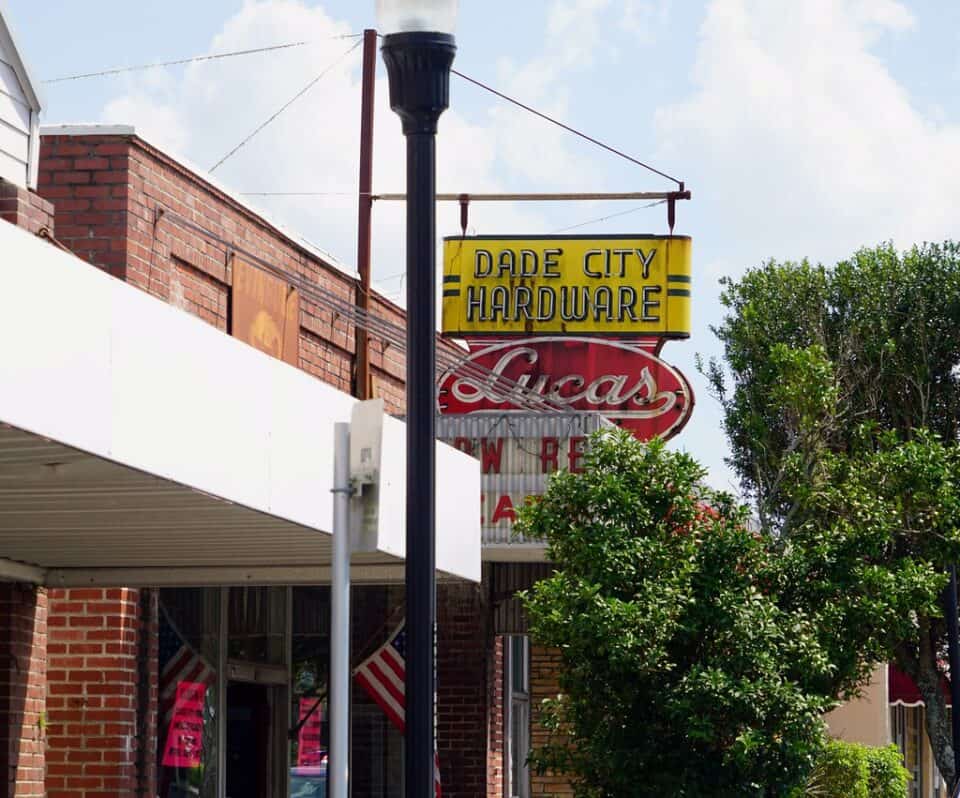
Cottondale’s housing stock spans more than a century, and carriers price it in era cohorts, not on a straight line by age. The oldest frame houses near the Main Street rail junction date to the town’s sawmill-and-railroad beginnings; the median home in the city proper was built in the mid-1970s; and manufactured homes make up roughly a quarter or more of local housing, echoing Jackson County’s 27.7% share — about 3.5 times the statewide figure. Each cohort carries its own claims record, which is why a solid 1950s concrete-block house can out-quote a fast-built 1980s frame one. Mobile homes are written on policy forms of their own, detailed in our manufactured home coverage guide. Documented roof age lives inside this driver too: carriers price 1970s-built homes very differently depending on the documented age of the roof. The other big structural lever is your Coverage A rebuild limit — carriers embed replacement-cost estimators in every quote to gauge it rather than guessing, so the limit reflects construction costs, not your purchase price. For the county-wide picture, see our guide to the best home insurance companies in Jackson County.
One more thing that comes up in a town surrounded by peanut fields and timber: animals and acreage. If you keep a few chickens, goats, or a horse for your own family’s use, some of our carriers can accommodate that through mini-farm endorsements on a standard homeowners policy — it’s carrier-specific, so tell us up front. Boarding, training, or breeding for income is a commercial exposure, and we’ll say so honestly and refer it out rather than leave it on a policy that wasn’t designed for it. Hurricane Michael’s damage to roughly 2.8 million acres of Florida forest — a timber loss estimated at $1.29 billion — is also a reminder that wooded acreage means tree-strike exposure worth discussing on any quote.
Auto insurance in Cottondale
Main Street in Cottondale is US 231 — the truck corridor running 31 miles north to Dothan and 51 miles south to Panama City — with the I-10 interchange just south of town. That means local drivers share their daily miles with a steady stream of long-haul freight, which is exactly the environment where a state-minimum liability policy leaves a household exposed. Our recommendation is at least 100/300 liability limits — the level leasing companies typically require — going higher where it fits the household’s assets, with uninsured/underinsured motorist coverage added, which is designed to help protect your household when an at-fault driver carries too little coverage. From there, an umbrella policy is the natural next step for added protection, and we’ll get to that below.
There’s a practical reason nearly every Cottondale household runs multiple vehicles: Jackson County’s only public transportation is JTrans, a demand-response service you schedule in advance — there is no fixed-route bus to fall back on, so every working adult drives. Work trucks, stock and utility trailers, a first car for a teenager at Cottondale High — each has its own insurance wrinkle, and quoting them together is where an independent agency earns its keep. Bundling home and auto with the same carrier group is one of the most reliable discounts across the 25+ carriers we quote for all personal lines, and it simplifies life to one agency and one phone number.
Flood insurance in Cottondale
The right flood question in Cottondale isn’t whether you need coverage — it’s how much. Jackson County’s flood exposure is riverine and rainfall-driven, with no storm-surge zones anywhere in the county, and the record proves rain alone is enough: Tropical Storm Alberto’s July 1994 rainfall drove record flooding on the Apalachicola and Chipola rivers that exceeded 100-year levels. Cottondale sits on comparatively high ground at about 154 feet, but flooding is decided at the scale of a single property — your home’s immediate surroundings, how it sits relative to the lots next door, and how the soil sheds or holds water. In karst country, closed depressions with no outlet can pond for days after a heavy rain, well away from any mapped river. High ground shrinks the risk; it doesn’t retire it.
Standard homeowners policies exclude flood — a few carriers offer optional flood endorsements, never automatic — so flood protection is a decision you make on purpose. Under FEMA’s Risk Rating 2.0, pricing is driven by your home’s distance to a flooding source, its rebuild cost, and its elevation and first-floor height — not by which zone letter the map assigns your street. NFIP policies cover up to $250,000 for the building and $100,000 for contents, with an 18% annual cap on increases for most existing policies. And if your wind coverage ever lands with Citizens, note that Citizens ties flood insurance to wind coverage — a statewide requirement phased in through January 1, 2027.
For many Cottondale homes the annual premium is modest precisely because the mapped risk is low — which is the best time to buy, not a reason to skip it. Where NFIP limits or waiting periods don’t fit, private flood carriers can quote higher building limits or different terms. We’ll price both paths against your actual rebuild cost so the number you carry is a decision, not a guess.
Umbrella insurance in Cottondale
An umbrella policy adds a layer of liability protection — typically in $1 million increments — above the limits on your home and auto policies, designed to help when a serious at-fault accident or an injury on your property produces a judgment bigger than those underlying limits. Cottondale life stacks up more of that exposure than its size suggests: daily miles on a federal truck route, acreage that neighbors and their kids wander across, farm ponds, hunting land, dogs, teenage drivers. If a lawsuit would reach your home equity, savings, or future wages, an umbrella is one of the least expensive ways to put a buffer in front of them.
Umbrella carriers require minimum underlying limits on your home and auto policies before they’ll attach — one more reason we quote the whole package together rather than one policy at a time. Sizing the umbrella is a ten-minute conversation about what you own and what you drive, and it’s included in any quote review we do.
One agency, 20+ Florida homeowners carriers
The value of an independent agency shows up in a market that keeps moving. Citizens — the state-backed insurer of last resort — fell from 746 Jackson County policies at year-end 2024 to 180 by April 30, 2026, as private carriers took policies back statewide. When carriers re-enter a market like this one, rates spread apart, and the only way to catch it is to compare the field. That’s the job: we quote your home across 20+ Florida homeowners carriers and your full household across 25+ carriers in all personal lines, then tell you plainly which fit is strongest.
Re-shopping is easier than it sounds. Connect your current policies through Canopy Connect in about a minute — no forms, no digging for declarations pages — and a licensed Florida agent will run the comparison and call you with what we find. One agency, one phone number, every policy in the household.