
The Complete Guide to Florida Homeowners Insurance
In this guide
Florida homeowners insurance is among the most expensive and complex in the nation. With rising premiums, hurricane deductibles, strict roof age requirements, and mandatory inspections, understanding your coverage is essential. This guide covers everything Florida homeowners need to know in 2026 — from regional cost breakdowns and wind mitigation credits to Citizens Insurance, flood zone requirements, and how to file a claim after a hurricane.
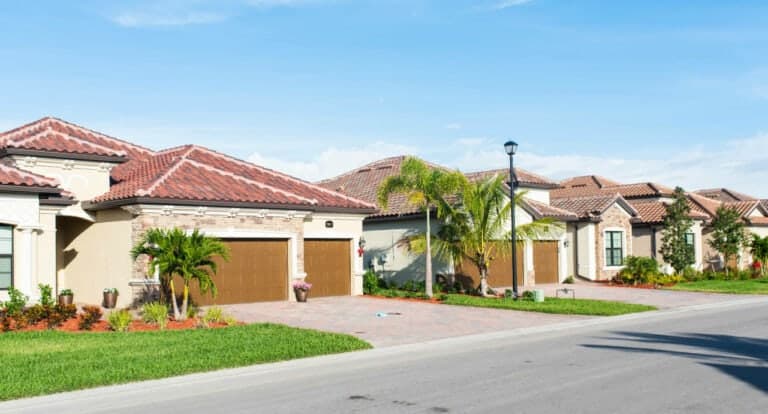
Good news for Florida homeowners in 2026: The market is softening. Following landmark tort reform legislation, numerous carriers have filed 5–10% rate reductions, and several new insurers have entered or re-entered the Florida market. The reforms — which addressed frivolous roof replacement lawsuits, limited one-way attorney fees, and reduced assignment of benefits (AOB) abuse — are working. However, slight to modest increases in rebuild costs are offsetting some of those rate savings, so the actual cost of most policies is landing around 2025 levels. The trend is moving in the right direction, but homeowners should not expect dramatic premium drops just yet.
Florida Homeowners Insurance Cost Breakdown by Region
What is the average cost of homeowners insurance in Florida?
The Florida Office of Insurance Regulation puts the statewide average at $3,757 per year with wind coverage (about $313 a month) and $2,586 without it, measured as total premium in force divided by policies in force for owner-occupied homeowners policies, Citizens included, with data reported as of March 31, 2026. That keeps Florida among the most expensive states in the country: the NAIC’s most recent national report shows Florida’s average HO-3 premium at $2,779 against $1,737 countrywide for 2023, the latest year it has published.
Some context on the home behind that average. The typical owner-occupied policy in OIR’s data carries about $757,000 of total insured value across dwelling, other structures, contents and loss of use combined (derived from OIR’s first-quarter 2026 statewide file), so the dwelling limit alone is a fraction of that. The market direction has turned: OIR reports that the average premium fell in 51 of 67 counties between its two most recent reports, with 44 companies requesting rate decreases and 48 requesting no change for policies effective in 2024 or later. Rising rebuild costs absorb some of that relief, so many renewals land near the prior year’s figure even when the rate itself dropped.
Costs vary widely by where you live, because wind exposure and rebuild cost differ by county. The full 67-county table, with and without wind, is on our Florida homeowners insurance rates by county page. See how carriers actually rank where you live — the best home insurance companies in Hillsborough, Orange, Duval, and Lee counties, or find your county.
Average annual premiums by Florida region (OIR county averages, with wind coverage)
- South Florida (Miami-Dade, Broward, Palm Beach): $5,975 to $6,323 per year. Hurricane exposure, high rebuild costs and an older housing stock keep every county in the region near the top of the table.
- Southwest Florida (Lee, Collier, Charlotte): $3,160 to $5,534 per year. Collier’s high-value coastal homes sit well above Lee and Charlotte.
- Tampa Bay (Hillsborough, Pinellas, Pasco): $2,756 to $4,063 per year. Pinellas carries the most open-water exposure in the region; Pasco the least.
- Central Florida (Orange, Seminole, Osceola): $2,940 to $3,610 per year. Distance from the coast holds the wind portion down; the spread is home age, construction and rebuild cost.
- Northeast Florida (Duval, St. Johns, Flagler): $2,488 to $2,883 per year. Moderate wind exposure, with coastal pockets in St. Augustine and the beaches.
- Northwest Florida / Panhandle (Escambia, Bay, Okaloosa): $3,465 to $3,889 per year. Gulf-facing wind exposure keeps the region above the inland counties.
- North Central / Rural Florida (Alachua, Marion, Levy): $2,191 to $2,698 per year. The least coastal exposure in the state, and the smallest gap between with-wind and without-wind premiums.
A note on averages. Every figure here is a snapshot of what insured homes paid on a given date. Your own premium is set by your coverage and endorsements, construction, roof shape and age, wind-mitigation features, deductibles, insured value and scores of other rating inputs, so an average tells you where a county sits, not what your home costs to insure.
Key takeaway: Where you live sets the wind and rebuild-cost backdrop; the South Florida counties average about two and a half times the North Central counties. Within any county, roof age, wind-mitigation credits, Coverage A and deductibles move your own premium more than the county line does. Source: OIR Property Insurance Stability Report, July 1, 2026, county averages from Market Intelligence Report data as of March 31, 2026.
Hurricane Deductibles Explained
What is a hurricane deductible in Florida?
A hurricane deductible is a separate, higher deductible that applies specifically to damage caused by a hurricane. Unlike a standard deductible that is a flat dollar amount, most hurricane deductibles in Florida are calculated as a percentage of your home’s insured value (dwelling coverage).
How hurricane deductibles are calculated
If your home is insured for $400,000 and you have a 2% hurricane deductible, you would pay $8,000 out of pocket before insurance pays on a hurricane claim. Common hurricane deductible options in Florida include 2%, 5%, and 10% of the dwelling value. Some insurers also offer flat-dollar hurricane deductibles of $500, $1,000, or $2,500 — though these typically come with higher premiums.
Summary:
- Hurricane deductibles are separate from your standard “all other perils” deductible.
- They are usually percentage-based (2%, 5%, or 10% of dwelling coverage).
- The higher your hurricane deductible percentage, the lower your annual premium.
- Hurricane deductibles are triggered when the National Hurricane Center declares a named hurricane.
- Choosing a 5% or 10% deductible can save hundreds per year but increases your out-of-pocket cost after a storm.
Roof Age Rules in Florida
How does roof age affect homeowners insurance in Florida?
Roof age is one of the most critical factors in obtaining and keeping homeowners insurance in Florida. Many private insurers will not write or renew a policy if the roof is older than 15 years. Some carriers set the threshold at 10 years, especially for shingle roofs in high-wind zones.
Florida law (effective since 2022) prohibits insurance companies from refusing to issue or renew a policy solely based on the age of the roof if the roof is less than 15 years old and passes inspection. However, many carriers still require a roof inspection for homes older than 20 years and may deny coverage if the roof shows significant wear or damage.
Roof age guidelines by material
- Asphalt shingle roofs: Typically insurable up to 15–20 years. After 15 years, expect a required inspection and possible coverage limitations.
- Metal roofs: Often insurable for 30–40+ years due to superior wind resistance and durability.
- Tile roofs (clay or concrete): Insurable for 25–40 years, though underlying materials may degrade sooner.
- Flat roofs: The most difficult to insure. Many carriers limit coverage to roofs under 10–15 years old.
Key takeaway: If your roof is approaching 15 years old, get a roof inspection proactively. A newer roof dramatically lowers your premium and makes it easier to find coverage.
4-Point Inspections in Florida
What is a 4-point inspection?
A 4-point inspection is a limited home inspection that examines the four major systems of a home: roofing, electrical, plumbing, and HVAC (heating, ventilation, and air conditioning). In Florida, most insurance companies require a 4-point inspection for homes that are 20 years old or older before they will issue or renew a homeowners policy.
What inspectors evaluate
- Roof: Age, material, condition, and remaining useful life.
- Electrical: Panel type, wiring material (copper vs. aluminum), and condition. Homes with Federal Pacific or Zinsco panels, or aluminum wiring, may be denied coverage.
- Plumbing: Pipe material (copper, PVC, polybutylene), water heater age, and evidence of leaks. Polybutylene pipes are a red flag for most insurers.
- HVAC: Age and condition of the air conditioning and heating system.
A 4-point inspection typically costs $75 to $200 and must be performed by a licensed inspector. The report is usually valid for one year.
Wind Mitigation Credits in Florida
What is a wind mitigation inspection?
A wind mitigation inspection evaluates how well your home is built to resist hurricane-force winds. Florida law requires insurance companies to offer premium discounts (credits) for homes that have specific wind-resistant features. These credits can reduce your premium by 10% to 50% or more.
Features that qualify for wind mitigation credits
- Roof shape: Hip roofs receive larger credits than gable roofs because they are more aerodynamic and resist wind uplift better.
- Roof deck attachment: Roofs with enhanced nail patterns (8d nails at 6-inch spacing) receive significant credits.
- Roof-to-wall connections: Homes with hurricane clips, straps, or structural connectors that tie the roof to the walls receive large discounts.
- Roof covering: FBC-equivalent (Florida Building Code) rated roof coverings installed after 2002 qualify for credits.
- Secondary water resistance (SWR): A sealed roof deck barrier that prevents water intrusion even if shingles blow off. This is one of the largest single credits available.
- Opening protection: Hurricane shutters, impact-rated windows and doors, or a combination that protects all openings.
A wind mitigation inspection costs approximately $75 to $150 and is valid for five years. Every Florida homeowner should get one — even modest wind-resistant features can save hundreds of dollars annually.
Citizens Insurance vs. Private Insurance in Florida
What is Citizens Property Insurance?
Citizens Property Insurance Corporation is Florida’s state-run insurer of last resort. It was created to provide coverage for homeowners who cannot find affordable insurance in the private market. Citizens is not a government-subsidized program — it is funded by policyholder premiums and, if necessary, assessments on nearly all Florida policyholders after a catastrophic loss.
Citizens vs. private insurance: key differences
- Eligibility: You can only get Citizens if you cannot find private coverage within 20% of Citizens’ rate for comparable coverage. Citizens is meant as a last resort, not a first choice.
- Pricing: Citizens has rate caps that limit annual increases, but rates have been rising steadily. Citizens may still be more expensive than some private options.
- Coverage limits: Citizens caps dwelling coverage at $700,000 (standard) and has specific limitations on certain property types.
- Depopulation: Florida actively encourages private carriers to “take out” Citizens policies. You may receive a notice that a private carrier is assuming your policy. You have the right to accept or reject the offer.
- Assessments: If Citizens experiences a deficit after a catastrophic hurricane season, it can levy surcharges on its own policyholders and potentially on all Florida insurance policyholders statewide.
- Claims handling: Citizens and private carriers handle claims differently. Private carriers may offer faster settlements, while Citizens has a structured process that some homeowners find slower.
Key takeaway: Always compare Citizens quotes with at least three private carriers before choosing. An independent insurance agent can help you compare the market efficiently. In many cases, private insurers offer competitive or better rates with fewer restrictions.
Flood Insurance Requirements by Zone in Florida
Does Florida homeowners insurance cover flooding?
No. Standard Florida homeowners insurance policies do not cover flood damage. Flood insurance must be purchased separately, either through the National Flood Insurance Program (NFIP) or a private flood insurance carrier.
Flood zone designations and requirements
- Zone A / AE (high-risk): Flood insurance is mandatory if you have a federally backed mortgage. These zones are near coastlines, rivers, or areas prone to storm surge.
- Zone V / VE (high-risk coastal): Also mandatory for mortgage holders. These are coastal areas subject to wave action and storm surge during hurricanes. Premiums are the highest in these zones.
- Zone X (moderate to low risk): Flood insurance is not required by mortgage lenders but is strongly recommended. Per FEMA, almost one-third of NFIP flood claims nationally come from properties outside high-risk zones.
Summary:
- Flood insurance is never included in a standard homeowners policy in Florida.
- If you are in Zone A, AE, V, or VE with a mortgage, flood insurance is legally required.
- NFIP policies cap at $250,000 for dwelling coverage and $100,000 for contents.
- Private flood insurance may offer higher limits, replacement cost coverage, and loss-of-use benefits that NFIP does not.
- There is typically a 30-day waiting period before a new flood policy takes effect.
Claims Process After a Hurricane in Florida
What should you do after a hurricane damages your home?
Filing an insurance claim after a hurricane can be stressful and complex. Here is a step-by-step guide to help you navigate the process effectively.
Step-by-step hurricane claims process
Step 1: Ensure safety first. Do not enter your home until authorities confirm it is safe. Watch for downed power lines, structural damage, gas leaks, and standing water.
Step 2: Document all damage immediately. Take extensive photos and videos of every damaged area — inside and out — before moving or discarding anything. This documentation is critical to your claim.
Step 3: Make temporary emergency repairs. You are permitted (and expected) to prevent further damage by tarping your roof, boarding up broken windows, or removing standing water. Keep all receipts — your insurer should reimburse reasonable emergency repair costs.
Step 4: Contact your insurance company promptly. Report your claim as soon as possible. Under Florida law, insurers must acknowledge your claim within 14 days and begin their investigation within 45 days.
Step 5: Meet with the adjuster. Your insurance company will send an adjuster to inspect the damage. Be present during this inspection and walk them through all affected areas. Provide your photos and documentation.
Step 6: Get independent repair estimates. Obtain at least two to three written estimates from licensed contractors so you can compare them with the insurer’s estimate.
Step 7: Review your settlement offer carefully. If the insurer’s payout seems low, you have the right to negotiate — and the best first moves are free: a written, evidence-backed appeal, the state’s no-cost mediation program, and your policy’s appraisal clause. Before paying a public adjuster or attorney a share of your claim, read our step-by-step guide to a denied or underpaid claim in Florida.
Step 8: Keep detailed records. Maintain a file with all correspondence, claim numbers, adjuster reports, receipts, and contractor estimates throughout the entire process.
Important Florida-specific timelines:
- You must give your insurer notice of a new or reopened claim within 1 year of the date of loss — for hurricanes, the date of landfall — and notice of a supplemental claim within 18 months (s. 627.70132). File as soon as you can.
- Insurers must pay or deny a claim within 60 days of receiving notice of the claim; after a declared emergency, regulators can extend that window by up to 30 days.
- If you dispute the claim outcome, you can request mediation through the Florida Department of Financial Services at no cost.
How to Lower Your Florida Homeowners Insurance Premiums
One of the most effective moves is to compare the market with an independent agent — see why Florida home insurance rates went up and how to compare for a stronger carrier.
What are the best ways to reduce homeowners insurance costs in Florida?
While Florida premiums are among the highest in the nation, there are concrete steps you can take to bring your costs down significantly.
Proven strategies to lower your premium
Take advantage of the softening market. Florida’s insurance market is experiencing rate relief thanks to tort reform legislation that curtailed lawsuit abuse and reduced insurer losses. Numerous carriers have filed 5–10% rate decreases, and new carriers are entering the state, increasing competition. Keep in mind that rising rebuild costs are offsetting some of that rate relief, so your actual policy cost may end up near 2025 levels — but more carriers competing for your business still means better options. If you have not shopped your policy in the last 12 months, now is a good time to compare quotes.
1. Get a wind mitigation inspection. This is the single most impactful step most Florida homeowners can take. If your home has any wind-resistant features — hurricane straps, impact windows, a hip roof, or an FBC-rated roof covering — you qualify for significant credits. A $100 inspection can save $500 to $2,000+ per year.
2. Replace or repair your roof. A new roof (especially one meeting current Florida Building Code standards) can reduce your premium by 20% to 40%. If a full replacement is not feasible, secondary water resistance (SWR) applied during re-roofing provides one of the largest discounts available.
3. Install hurricane shutters or impact windows. Protecting all openings (windows, doors, garage doors) with approved hurricane protection qualifies you for opening protection credits. Impact-rated garage doors are especially important for wind mitigation scoring.
4. Increase your hurricane deductible. Moving from a 2% to a 5% hurricane deductible can lower your annual premium noticeably — but make sure you can afford the higher out-of-pocket cost if a hurricane strikes.
5. Bundle your policies. Purchasing homeowners and auto insurance from the same carrier typically saves 5% to 15% on both policies.
6. Improve your home’s security. Monitored alarm systems, fire alarms, automatic water shutoff valves, and gated communities can qualify you for additional discounts.
7. Shop the market. Florida’s insurance market changes rapidly. Carriers enter and exit the state, and rates vary widely. Work with an independent agent who can compare quotes from multiple companies.
8. Maintain a claims-free history. Homeowners with no claims in the past three to five years often qualify for claims-free discounts, typically 2% to 10%.
9. Review your coverage limits. Make sure you are not over-insured. You do not need to insure the land value — only the cost to rebuild the structure. An independent agent can help right-size your coverage.
Frequently Asked Questions — Florida Homeowners Insurance
Is Florida homeowners insurance getting cheaper in 2026?
The market is softening. Tort reform legislation has significantly reduced frivolous lawsuits, one-way attorney fees, and assignment of benefits abuse that were driving up costs. As a result, numerous carriers have filed 5–10% rate reductions, and new insurers are entering the Florida market. However, slight to modest increases in rebuild costs — due to rising material and labor prices — are absorbing some of that savings. The net effect is that most homeowners are seeing actual policy costs around 2025 levels. Premiums are still among the highest in the nation, but the trend is improving, and shopping your coverage in 2026 may turn up better options and more competitive quotes than in recent years.
How much is homeowners insurance in Florida in 2026?
The Florida Office of Insurance Regulation puts the statewide average at $3,757 per year with wind coverage and $2,586 without, based on premium in force divided by policies in force. County averages run from about $2,100 to about $7,900 a year: South Florida counties average roughly $6,000 to $6,300, and North Central counties about $2,200 to $2,700.
Is flood insurance required in Florida?
Flood insurance is required for properties in high-risk flood zones (A, AE, V, VE) that have a federally backed mortgage. It is not required in Zone X (moderate to low risk) but is strongly recommended, as a significant number of flood claims come from outside designated high-risk areas.
What does a 4-point inspection cover?
A 4-point inspection covers four major home systems: roofing, electrical, plumbing, and HVAC. It is typically required for homes 20 years or older and costs between $75 and $200.
How do I get wind mitigation credits?
Hire a licensed inspector to perform a wind mitigation inspection (cost: $75 to $150). The inspector will document your roof shape, attachment method, roof-to-wall connections, opening protection, and secondary water resistance. Submit the report to your insurance agent, and applicable credits will be applied to your policy.
What is the difference between Citizens and private insurance in Florida?
Citizens Property Insurance is Florida’s state-run insurer of last resort for homeowners who cannot find affordable private coverage. Private insurance is provided by independent companies competing in the open market. Citizens has coverage caps, potential statewide assessments after catastrophic losses, and eligibility restrictions. Private insurers may offer broader coverage, higher limits, and in some cases more competitive pricing.
How long do I have to file a hurricane claim in Florida?
Florida law requires notice of a new or reopened property claim within one year of the date of loss — for hurricanes, the date of landfall — and notice of a supplemental claim within 18 months (s. 627.70132). Filing as soon as possible is always recommended for accurate damage documentation and faster resolution.
Can my insurance company drop me because of my roof age?
Florida law prohibits insurers from refusing to issue or renew a policy solely based on roof age if the roof is less than 15 years old. However, if the roof fails an inspection or is older than 15 years with visible deterioration, insurers may decline coverage or require a roof replacement before issuing a policy.
What is the best way to lower my Florida homeowners insurance premium?
The most effective strategy is getting a wind mitigation inspection and making qualifying improvements to your home. A new roof, hurricane shutters or impact windows, and proper roof-to-wall connections can save 20% to 50% on your annual premium. Additionally, shopping with an independent agent, bundling policies, raising your hurricane deductible, and maintaining a claims-free record all contribute to significant savings.
Do I need homeowners insurance in Florida?
Florida does not legally require homeowners insurance. However, if you have a mortgage, your lender will require it. Even if you own your home outright, going without homeowners insurance in Florida is extremely risky given the state’s exposure to hurricanes, flooding, and other natural disasters.
Need help finding the right Florida homeowners insurance policy? Cornerstone Insurance Group is an independent agency that shops multiple carriers to find you the best coverage at the best price. Contact us today for a free quote — we specialize in Florida homeowners insurance, wind mitigation savings, flood coverage, and helping homeowners navigate the claims process.
2026 Florida Insurance: Latest Articles
Go deeper with our Florida insurance guides:
- Why did my Florida home insurance go up, and how to compare for a stronger carrier
- Florida home insurance financial-strength ratings (AM Best, Demotech & Kroll), explained
- Bundling home, auto & umbrella in Florida with one local advisor
- Your homeowners insurance binder for closing in Florida
- Moving to Florida? How your home & auto insurance changes