
Homeowners Insurance in Punta Gorda, FL
Punta Gorda rebuilt itself twice in the space of two decades — after Hurricane Charley in 2004 and Hurricane Ian in 2022 — and that history is written into how every carrier quotes a home here. The era your house was built or rebuilt in, its documented roof age, and its relationship to Charlotte Harbor are among the biggest levers on what you pay. We’re an independent Florida agency: one conversation covers 20+ Florida homeowners carriers, and we’ll give you straight answers — including on flood, which is its own policy — or endorsement — everywhere in Florida, Punta Gorda included.
Free, no obligation — talk to a licensed Florida agent today.
What shapes homeowners insurance rates in Punta Gorda
Water damage — the claim we actually file most
Ask what our agency files most often for Punta Gorda homeowners and the answer isn’t hurricane wind — it’s water from inside the house. Failed supply lines, aging water heaters, washing-machine hoses, and slow leaks behind cabinets generate more claims, year in and year out, than any storm. That’s why we encourage every client here to carry as much water-damage coverage as they can qualify for — because carriers don’t treat it equally. A home’s age, the type and age of its plumbing, and any recent water losses on record can limit or even exclude water coverage with some of our carriers, while others may offer full limits on the same house. Several also discount for automatic water shut-off valves and leak-detection devices, which can pay for themselves in premium alone.
Fire sits at the other end of the spectrum: far less frequent, but the most severe loss a home can take — which is why we spend real time making sure your Coverage A rebuild limit reflects what it would actually cost to reconstruct your home, not what you paid for it.
Wind — the everyday kind first, then the historic kind
The wind that touches the most Punta Gorda roofs in any given year comes from ordinary summer thunderstorms — sea-breeze storms off the Gulf that bring straight-line wind, hail, and some of the most active lightning in the country. Those everyday storms drive shingle damage, lanai-screen claims, and tree losses long before a named storm ever shows up in the forecast.
The named-storm history here is dated and specific: Hurricane Charley crossed directly over Punta Gorda as a Category 4 on August 13, 2004, and Hurricane Ian made its second landfall near Punta Gorda on September 28, 2022 at an estimated 145 mph, with a gust near 135 mph recorded at the Punta Gorda airport station. Carriers know this history — it lives in the loss data behind every quote — and it’s a major reason wind-mitigation credits and opening protection matter so much on this coast. A current wind-mitigation inspection (form OIR-B1-1802, valid five years) is one of the highest-leverage documents a Punta Gorda homeowner can hand us.
Building eras — why “when” matters more than “how old”
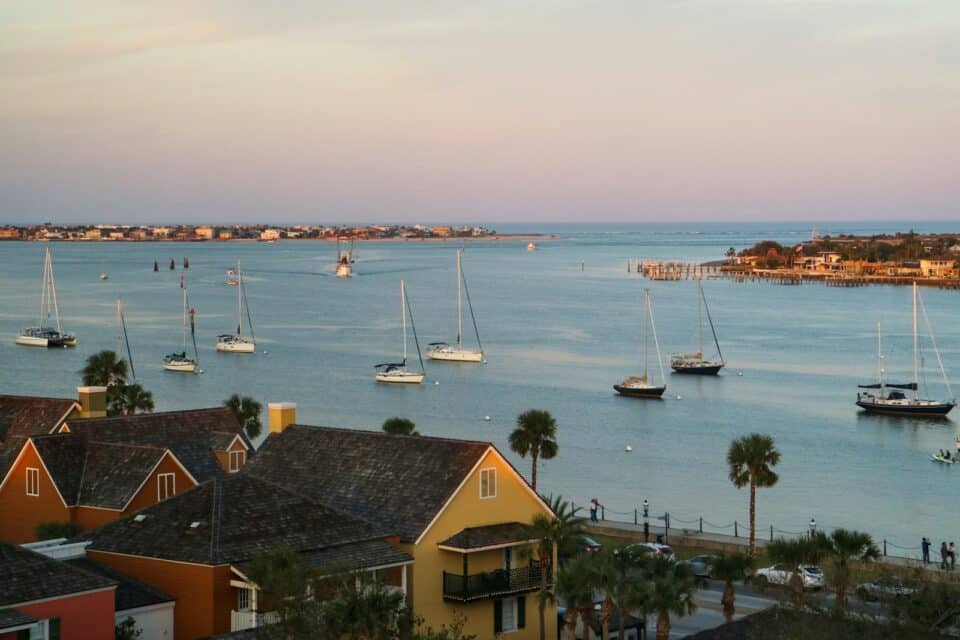
Carriers don’t price a home’s age on a straight line — they price building eras, each cohort by its construction type and its claims record. Punta Gorda’s eras are unusually distinct. Punta Gorda Isles began in 1957 as a dredged canal community carved from mangrove shoreline, with more than 45 miles of saltwater canals and homes built out from the 1960s through the 1980s, with infill in the decades that followed. Burnt Store Isles carries a similar canal-front profile, with harbor access through a lock. The historic downtown blocks hold some of the city’s oldest addresses — but Charley’s direct hit in 2004 forced so much reconstruction that the city’s core is newer-code than its age suggests, and post-Charley rebuilds carry modern Florida Building Code wind features that carriers reward. Farther out, the deed-restricted Deep Creek area and the newer construction along the Burnt Store Road corridor round out the market with different underwriting profiles again. A concrete-block 1960s canal home with a documented new roof can genuinely outquote a 1980s frame home with paperwork gaps — the era cohort and the documentation decide it, and documented roof age on 1970s- and 1980s-built homes is often the single swing factor.
For the county-wide picture — including how carriers rank across Charlotte County — see our guide to the best home insurance companies in Charlotte County.
Sinkholes — a short, honest note
Charlotte County sits outside Florida’s sinkhole belt — state karst mapping classifies Southwest Florida as low sinkhole-activity because the limestone lies under thicker sediment here. Every admitted Florida homeowners policy automatically includes catastrophic ground cover collapse coverage, so Punta Gorda buyers start with that protection by statute. The fuller story is in the FAQ below.
Auto insurance in Punta Gorda, FL
Public transportation in Charlotte County is a curb-to-curb dial-a-ride you book in advance — there’s no fixed-route bus network, and no Sunday service — so in practice every working adult in Punta Gorda drives, and most households run more than one vehicle. Add the US-41 twin bridges over the Peace River, I-75 on-ramps at Jones Loop and Duncan Road, a winter season that visibly thickens traffic, and the boat trailers and golf carts that come with life in the Isles, and your auto policy is doing real work here.
We recommend at least 100/300 in liability limits — the level leasing companies typically require — with higher limits where they fit your picture, uninsured/underinsured motorist (UM/UIM) coverage added on top, and an umbrella policy as the opportunity for a further layer of protection over both home and auto (more on that below). Bundling home and auto with the same carrier group frequently unlocks discounts on both sides of the ledger.
The full local picture — carriers, discounts, and what moves auto rates here — is on our Punta Gorda auto insurance page.
Flood insurance in Punta Gorda, FL
In a harbor city, the flood question is never whether you need coverage — it’s how much. Charlotte Harbor is the defining flood reality here: Ian pushed water through the harbor in 2022, and in 2024 Hurricane Helene sent 3–5 feet of inundation into the county’s southern reaches while Hurricane Milton drove 5–8 feet into northern Charlotte Harbor. Charlotte County led all of Southwest Florida with 4,885 flood insurance claims filed between August 1 and October 31, 2024. In Punta Gorda Isles and Burnt Store Isles, the canals that make the lifestyle also carry harbor water inland — a canal-front home floods from its seawall, not from the beach.
But surge distance is only one note in the score. Flooding is ultimately decided street by street: by a home’s immediate surroundings, its elevation relative to the properties next to it, and how the ground drains — which is why heavy summer rain can and does flood homes in Deep Creek and along the Peace River well away from the harborfront. Standard homeowners policies exclude flood entirely (a few carriers offer optional flood endorsements — never automatic), so every Punta Gorda homeowner needs a deliberate flood decision, not an assumption.
What flood coverage costs — and the discounts Punta Gorda earns
Under the NFIP’s Risk Rating 2.0, your flood premium isn’t set by your flood zone — it’s set by your home’s distance to its flooding source, its rebuild cost, and its elevation and first-floor height. Most existing NFIP policies are also protected by an 18% annual increase cap under federal law. The NFIP offers up to $250,000 in building coverage and $100,000 for contents; private flood carriers can quote higher limits and sometimes sharper pricing on elevated or newer-built homes — we compare both. Punta Gorda’s own floodplain management earns a Class 5 Community Rating System standing, worth a 25% NFIP discount inside Special Flood Hazard Areas and 10% outside them. One more scheduling note: Citizens ties flood insurance to wind coverage — a statewide requirement phased in through January 1, 2027.
Umbrella insurance in Punta Gorda, FL
Punta Gorda liability exposure looks like this: a pool and lanai where grandkids and neighbors gather, a dock and a boat behind the house, a dog, and two or three vehicles on roads shared with heavy seasonal traffic. Your home and auto policies each carry a liability ceiling — an umbrella policy is designed to add a layer of protection above both, typically in $1 million increments, and for the protection it adds it’s typically among the most affordable policies a household carries.
An umbrella comes with its own underlying-limit requirements, and every carrier is slightly different: most look for 250/500 bodily injury or a $300,000 or $500,000 combined single limit on the auto, $300,000 of liability on the home, and similar limits on boats and motorcycles, so we quote the layers together to make sure they connect. We’ll walk through your actual exposures and tell you what an extra layer would cost before you decide.
One Punta Gorda quote request. 20+ Florida homeowners carriers.
Appetite for this coast varies enormously carrier to carrier — one may decline a 1970s-built canal home the next quotes happily with a current wind-mitigation inspection in hand. That’s the case for an independent agency: we quote 20+ Florida homeowners carriers — 25+ across our personal lines — from one conversation, and we re-shop at renewal instead of hoping your carrier stays competitive. If you’re insured through Citizens, we can check whether the private market — and depopulation offers — put a better option in front of you.
The fastest start: share your current policies securely through Canopy Connect — it takes about a minute, and we’ll come back with real comparisons rather than guesses.
Punta Gorda insurance questions we hear most
What drives the cost of homeowners insurance in Punta Gorda?
Seven things, in roughly this order. (1) The era your home was built in — carriers price building eras as cohorts, by construction type and that cohort’s claims record, never on a straight age line; a 1960s concrete-block Punta Gorda Isles home can outperform a 1980s frame home, and your documented roof age lives inside this driver. (2) Construction materials — block versus frame, roof shape and attachment. (3) Your Coverage A rebuild limit — carriers embed replacement-cost estimators to gauge the rebuild-cost limit on every quote rather than guessing, and waterfront finish levels push those estimates up. (4) Endorsements you choose, like replacement cost on contents and law & ordinance coverage — the latter earns its keep in a city with Punta Gorda’s rebuilding history. (5) Wind-mitigation discounts from a current OIR-B1-1802 inspection. (6) Miscellaneous discounts — gated community, monitored alarm, insurance score, water leak protection devices. (7) The area’s historic and actual loss data, which on this coast includes Charley and Ian. Each of our 20+ Florida homeowners carriers weighs these differently — which is why we compare all of them.
Will a prior claim raise my homeowners rate in Punta Gorda?
A prior claim does not raise your property rate — that’s a persistent myth. What it actually does is narrow which carriers will offer you a policy, and it costs you the claims-free discount, which typically runs 2–10%. The practical effect is the same reason an independent agency matters: after a claim, the job is finding the carriers still glad to have you, and we quote 20+ of them.
How much flood insurance do I actually need in Punta Gorda?
Start from the premise that everyone in Punta Gorda needs some flood coverage — the question is how much. Standard homeowners policies exclude flood (a few carriers offer optional flood endorsements — never automatic). The NFIP offers up to $250,000 for the building and $100,000 for contents; if your rebuild cost runs higher — common for canal-front homes — private flood can quote larger limits. Your premium under Risk Rating 2.0 is driven by distance to your flooding source, rebuild cost, and elevation and first-floor height, not by your zone, and most existing NFIP policies carry an 18% annual increase cap. Punta Gorda’s Class 5 CRS rating earns a 25% NFIP discount in Special Flood Hazard Areas and 10% outside them. We’ll size the building and contents limits to your actual home, not a rule of thumb.
Does homeowners insurance in Punta Gorda cover sinkholes?
Here’s the honest version. Every admitted Florida homeowners policy automatically includes catastrophic ground cover collapse coverage under Florida Statute 627.706 — that’s set by statute, not by carrier choice. Broader sinkhole loss coverage must be offered by carriers for an additional premium, but they don’t have to approve it: an inspection can be required first, and approved endorsements typically carry a deductible of 10% of your dwelling limit, not of the claim. Florida law also sets a strict five-part structural-damage definition — cosmetic cracking doesn’t qualify — and paid sinkhole claims are recorded with the county clerk and disclosed at sale. The good news for Punta Gorda: Charlotte County sits outside Florida’s sinkhole belt, and state karst mapping rates Southwest Florida low-activity because the limestone lies under thicker sediment. For most buyers here, the automatic coverage plus knowing your lot is the right posture — and we’ll tell you straight what is and isn’t realistic to place.
Do I really need umbrella insurance in Punta Gorda?
Need is your call; here’s the math we walk through. Your home and auto liability limits are ceilings, and a serious incident — a pool or dock accident, a multi-car crash on US-41 or I-75 — can exceed them. An umbrella is designed to add protection above both policies, usually in $1 million layers, subject to its own terms, and it’s often one of the least expensive policies we place relative to what it protects. Most umbrella carriers require higher underlying limits than a household starts with, commonly 250/500 bodily injury or a $300,000 or $500,000 combined single limit on the auto policy, $300,000 of liability on the home, and comparable limits on watercraft and motorcycle policies, which is why the umbrella and the limits conversation happen in the same review. If you have a pool, a dock, a boat, a dog, or drivers in the household, it’s worth pricing — the quote costs nothing.
Punta Gorda took direct hits from Charley and Ian — what does that mean for my windstorm coverage?
Wind is a covered peril on standard Florida homeowners forms (watch for the rare wind exclusion), but hurricane losses carry a separate hurricane deductible — typically 2%, 5%, or 10% of your dwelling limit, chosen at purchase — and that choice deserves more thought than it usually gets. The city’s storm history has a silver lining: so much of Punta Gorda was rebuilt after Charley in 2004 that the core is newer-code than its age suggests, and modern-code features plus documented opening protection translate into real wind-mitigation credits. A current wind-mitigation inspection (form OIR-B1-1802, valid five years) is the document that captures them — if yours is older than five years or missing, that’s often the first money we find.