
Homeowners Insurance in Tarpon Springs, FL
Cornerstone Insurance is an independent Florida agency, and we compare 20+ Florida homeowners carriers for Tarpon Springs, FL and Pinellas County homes. Between the Gulf, the Anclote River, and the bayous, your home’s elevation and documented roof age move your rate more than anything else here — and flood is its own policy — or endorsement — everywhere in Florida, Tarpon Springs included. This page covers what actually moves your rate — home, auto, flood, and umbrella.
Free, no obligation — talk to a licensed Florida agent today.
What shapes homeowners insurance rates in Tarpon Springs
The claim we see most isn’t storm damage — it’s water damage from inside the house. Supply lines, water heaters, washing-machine hoses, and A/C drain lines fail quietly and do expensive damage before anyone notices. It’s also one of the few risks you can price down: many carriers offer real discounts for automatic water shut-off or leak-detection devices, and carriers differ widely in how they treat interior water damage — one of the bigger reasons the same Tarpon Springs home quotes very differently across the market. We encourage clients to carry as much water-damage coverage as they can qualify for — with the honest caveat that recent water losses, the age of the home, and the type and age of its plumbing can limit or even exclude water coverage with some carriers. Fire is the opposite profile — less frequent, but the most severe loss a home policy faces — which is why carriers embed replacement-cost estimators to gauge the rebuild-cost limit on every quote rather than guessing, and it matters doubly on the older wood-frame homes near downtown.
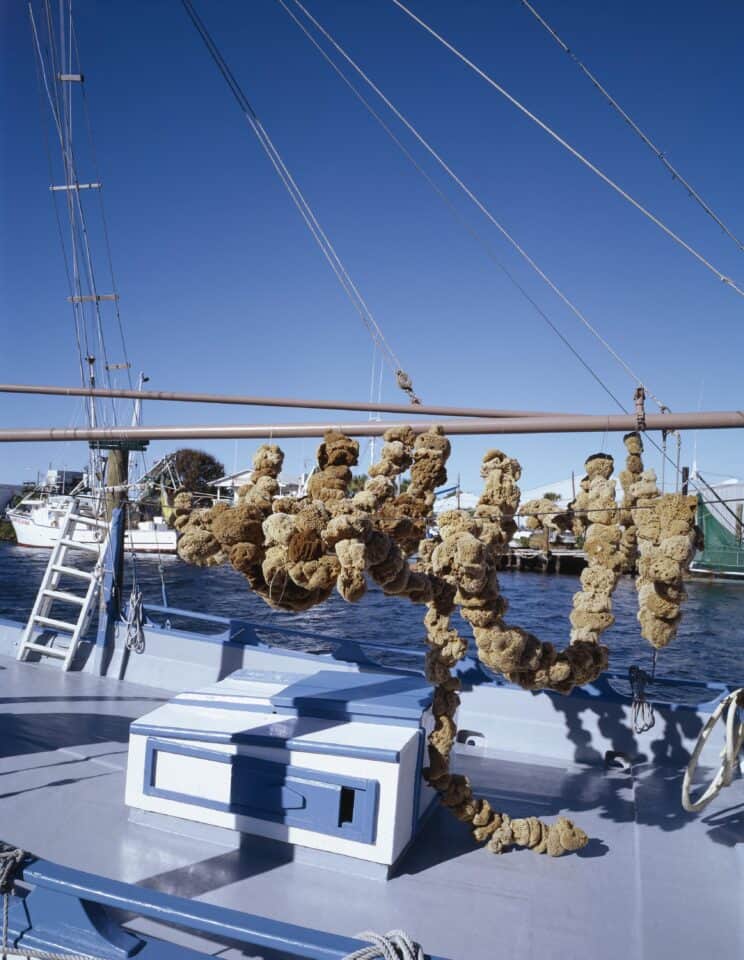
Most wind claims here come from ordinary summer thunderstorms, not named storms. Straight-line wind, hail, and lightning do the routine damage every year. The big years are different — and Tarpon Springs has lived through one. Hurricane Helene (September 2024) pushed water roughly 6.8 to 7.3 feet above normal high tide on the Pinellas barrier islands per the National Hurricane Center — a USF coastal researcher called it the strongest storm to impact this coastline in roughly 80 years — and it put several feet of seawater into the sponge-docks district along the Anclote River. Two weeks later, Hurricane Milton crossed the region with hurricane-force gusts (101 mph was recorded in the county) and knocked out power to roughly 70% of Pinellas. Wind is a covered peril on standard Florida homeowners forms — a small number of policies are written wind-excluded, so it’s worth confirming yours isn’t — and on a coastal address, wind-mitigation credits (roof shape, deck attachment, clips and straps) are usually the single biggest discount an inspection can document. But notice what Helene actually did to Tarpon Springs: the damage was overwhelmingly water, not wind — and homeowners policies exclude flood — which is why the flood section below starts from how much, not whether.
Sinkholes in Tarpon Springs deserve honest calibration, not a scare. Per the Florida Office of Insurance Regulation, roughly two-thirds of statewide sinkhole claims from 2006–2010 came from Hernando, Pasco, and Hillsborough counties; Pinellas logs materially less activity. Tarpon Springs does sit at the county’s northern edge against Pasco — one of the state’s most active sinkhole counties — so buyers here reasonably ask. Here’s how the coverage actually works: every admitted Florida homeowners policy automatically includes catastrophic ground cover collapse coverage, the severe and narrowly defined event. Full sinkhole loss coverage is an optional endorsement carriers must offer for an additional premium — but offering and approving are different things: a carrier can require a property inspection first and often declines based on what it finds, and approved endorsements typically carry a 10% deductible calculated on your dwelling limit, not on the claim. If you’re buying and the ground worries you, a pre-purchase sinkhole inspection tells you more than any endorsement — and we’ll tell you straight what is and isn’t realistic to place for your address.
Roof age and building era are the pricing levers on Tarpon Springs’ housing stock. Age isn’t a straight line, either: carriers price building eras — a concrete-block home from the 1950s can outperform a wood-frame home from a fast-built 1980s boom — because what’s really being priced is each era’s construction and its actual claims record. The median home here dates to about 1984, but the market brackets that number on both ends: the historic district near downtown and Spring Bayou holds 1910s Victorians and 1920s bungalows, Pointe Alexis built out from 1986 with phases running into 2007 on the Gulf side of town, and Crescent Oaks added a gated golf-course community off East Lake Road in the early-to-mid 2000s. Carriers price the documented age of your roof, not the year the house was built — and many 1980s- and 1990s-built homes here are on a second or third roof. A roof permit or inspection report proving a newer roof frequently opens carriers that would otherwise decline the home, and on the pre-1930 stock downtown, updated wiring, plumbing, and roof documentation is often the difference between one available market and several. We break down which carriers compete for Pinellas County homes in our county carrier guide.
Auto insurance in Tarpon Springs, FL
US 19 is the corridor that shapes how we build Tarpon Springs auto policies. The Pinellas stretch of US 19 — running from Tarpon Springs south through Clearwater to St. Petersburg — recorded 94 traffic fatalities from 2020 through 2022 — per a ConsumerAffairs analysis of federal crash data, the most of any single road within any single Florida county over that period. Between US 19, Alt 19 through downtown and the docks district, and East Lake Road feeding the golf communities, everyday exposure here is higher than the small-town feel suggests.
That’s why we recommend at least 100/300 in liability limits for the Tarpon Springs quote — the level a leased vehicle typically requires — going higher where it fits, weighing an umbrella for added protection, and then adding uninsured/underinsured motorist (UM) coverage. Roughly 15 to 20 percent of Florida drivers carry no coverage, according to the Insurance Research Council, and when the other driver carries nothing, UM is designed to be the layer that responds for you and your passengers, subject to your policy’s terms. It is routinely the most underbought coverage we see on policies people transfer in to us.
Pinellas bus service thins out this far north, so Tarpon Springs households keep their own wheels — families with teen drivers in the East Lake Road communities, retiree households with a car apiece. Bundling home and auto with the same carrier group is one of the most reliable discounts in the Florida market, and as an independent agency we quote the bundle across 25+ carriers in our personal lines rather than one company’s version of it.
Flood insurance in Tarpon Springs, FL
The Tarpon Springs flood question isn’t whether you need flood coverage — it’s how much. This is a city built around water: the Gulf on the west, the Anclote River running through the middle of town, Spring Bayou and Whitcomb Bayou winding past residential streets, and Lake Tarpon on the eastern edge. Hurricane Helene (September 2024) made the stakes concrete — a surge that ran roughly 6.8 to 7.3 feet above normal high tide on the Pinellas barrier islands (National Hurricane Center) put several feet of seawater into homes and businesses around the sponge docks, one year after Hurricane Idalia had already flooded the same district. The response has been institutional, not just personal: the water management district drew down Lake Tarpon ahead of Helene’s surge, and the city has a flooding-abatement project along Whitcomb Bayou in design. Flooding is decided close to home — your immediate area, your elevation among adjacent properties, and the soil beneath you — which is why it can and does occur far from any coast. Standard homeowners policies exclude flood (a few carriers offer optional flood endorsements — never automatic), so it’s a separate policy for every home. You can check your address on the county’s FEMA flood map viewer at floodmaps.pinellas.gov and your evacuation zone at kyz.pinellas.gov.
“My lender doesn’t require it” tells you the mortgage cleared without it — not that rising water skips your block. Zone X changes the mortgage paperwork; it doesn’t change where the rain and the tide go. Under FEMA’s Risk Rating 2.0 methodology, flood pricing isn’t driven by your zone anyway: premiums are built from your distance to a flooding source, your home’s rebuild cost, and its elevation and first-floor height — which is why two Tarpon Springs addresses a few blocks apart can price very differently, and why homes east of Alt 19 often price lower than people expect. Annual increases on most existing NFIP policies are capped at 18% under the 2014 Homeowner Flood Insurance Affordability Act. And one clear signal of where Florida is headed: Citizens required flood coverage on $400,000+ homes with wind coverage by January 1, 2026, and the requirement is scheduled to reach all remaining Citizens personal residential wind policies on January 1, 2027.
We quote both NFIP policies (up to $250,000 building / $100,000 contents) and private flood markets, which can offer higher limits where the NFIP caps out — a real consideration on waterfront and bayou-front homes here. Five minutes with an agent settles the “how much” question for your specific address.
Umbrella insurance in Tarpon Springs, FL
An umbrella policy is designed to sit above your home and auto liability limits — typically sold in $1 million increments — and add an extra layer when a serious claim or lawsuit exceeds what those underlying policies carry. It’s the coverage people research after a close call on US 19; the better time is before.
The Tarpon Springs case for an umbrella is concrete. You share one of Florida’s most dangerous roads with drivers who often carry minimal or no insurance, which raises the stakes of any at-fault accident on your side of the ledger. Many homes here have pools and lanais; waterfront properties add docks and visiting guests to the liability picture. And plenty of households here have exactly what liability claims target: home equity and retirement savings. An umbrella is designed to help protect those accumulated assets, subject to the policy’s terms and its required underlying limits.
Carriers require minimum liability limits on your home and auto policies before an umbrella attaches, so it’s usually quoted as part of a package review rather than alone — which is precisely the package review an independent agent runs in one pass across our carriers.
One Tarpon Springs quote request. 20+ Florida homeowners carriers.
Cornerstone is an independent agency — we represent many carriers rather than one. For Tarpon Springs homes we compare 20+ Florida homeowners carriers, and 25+ carriers across our personal lines for auto, flood, umbrella, and more. The Pinellas market has moved fast: Citizens counted 32,208 policies in the county at the end of 2025 — down about 65% in one year as private carriers took policies out — and if yours was taken out of Citizens, the carrier that took it is not automatically your best price. When the market moves, we re-shop; you keep one agency and one phone number: 813.920.8181.
Already insured? The fastest re-shop is sharing your current policies through Canopy Connect — about one minute, no documents to dig up — and we’ll come back with what the rest of the Florida market says about your house.