
Hurricane Preparation for Florida Homeowners Insurance Consumers
Before a storm, the best thing you can do for your policy is know what is in it, and we help our clients check that every summer. Here is how to prepare your home and what to confirm on your declarations page.
How to Prepare for a Hurricane in Florida & What to Check in Your Homeowners’ Insurance Policy
If you live on Florida’s Gulf Coast, you know that the stunning sunsets and vibrant coastal life come with the possibility of unpredictable weather. During hurricane season, every Florida community is at risk of severe storms and hurricanes that can damage your home and property. Ensuring you’re well-prepared for such events includes both physical preparations and understanding your homeowners’ insurance policy.
In this article, we’ll walk you through essential hurricane preparedness steps for Florida homeowners and help you understand what to check in your homeowners’ insurance policy. This is where a coverage review with your agent before the season pays off.
1. Understand Your Hurricane Risk in Florida
Florida’s peninsula sits in the path of hurricanes and tropical storms from both the Gulf and the Atlantic. As Hurricanes Helene and Milton proved in 2024, a storm does not need to make a direct hit to cause record surge and flooding damage. Hurricane preparedness is a key part of living in this region.
When reviewing your Florida homeowners’ insurance, it’s essential to assess your home’s vulnerability to these storms. Flooding, wind damage, and heavy rains are all risks you need to consider when reviewing your policy.
2. Create an Evacuation Plan and Emergency Kit
When preparing for a hurricane, having a solid evacuation plan and an emergency kit is crucial. In coastal and low-lying areas, flooding and evacuation orders are a regular part of storm season.
-
- Know Your Evacuation Routes: Familiarize yourself with local evacuation routes and shelters. Your city and county offer resources to help residents know where to go in case of a mandatory evacuation.
-
- Prepare an Emergency Kit: Include essentials like bottled water, non-perishable food, medications, flashlights, batteries, a first-aid kit, and important documents. You can also include an extra phone charger, cash, and personal hygiene products.
This preparation goes hand-in-hand with your home insurance. It’s always a good idea to take inventory of your belongings and store important documents safely in case of evacuation.
3. Protect Your Home from Hurricane Damage
Before a hurricane strikes, take proactive steps to safeguard your home from the potential destruction caused by wind, rain, and debris.
-
- Install Hurricane Shutters: Hurricane shutters or plywood can protect your windows and doors from flying debris. This can help prevent breakage and minimize damage.
-
- Inspect Your Roof: Make sure your roof is in good condition. Loose shingles or tiles can cause water damage. Have your roof inspected by a professional to ensure it can withstand hurricane-force winds.
-
- Clean Gutters: Ensure your gutters and downspouts are clear of debris to prevent water buildup that could lead to flooding.
Taking these steps can reduce the likelihood of needing to file a claim with your homeowners’ insurance after the storm.
4. Flooding Risk and How to Protect Your Home
Storm surge gets the headlines, but heavy rainfall and rising water flood Florida homes far from the coast too. Low elevation and proximity to the Gulf or the Atlantic make many neighborhoods more susceptible to flooding during hurricanes than their owners expect.
-
- Flood Zones: Your flood zone tells you what a lender requires, not how water behaves. Every Florida home needs some amount of flood coverage, and the honest question is how much, since premiums now reflect distance to flooding sources, construction and elevation rather than the zone alone.
-
- Sandbags and Barriers: Keep sandbags or other barriers on hand to prevent water from entering your home in case of heavy rainfall.
Remember, standard homeowners policies exclude flood damage, though some carriers now offer an optional flood endorsement. If you do not have flood coverage, now is the time to size it. A new federal flood policy generally takes effect 30 days after purchase, with limited exceptions such as a loan closing, and it excludes a flood already in progress when it starts, so the time to add or increase flood coverage is early in the season, not when a storm is on the map.
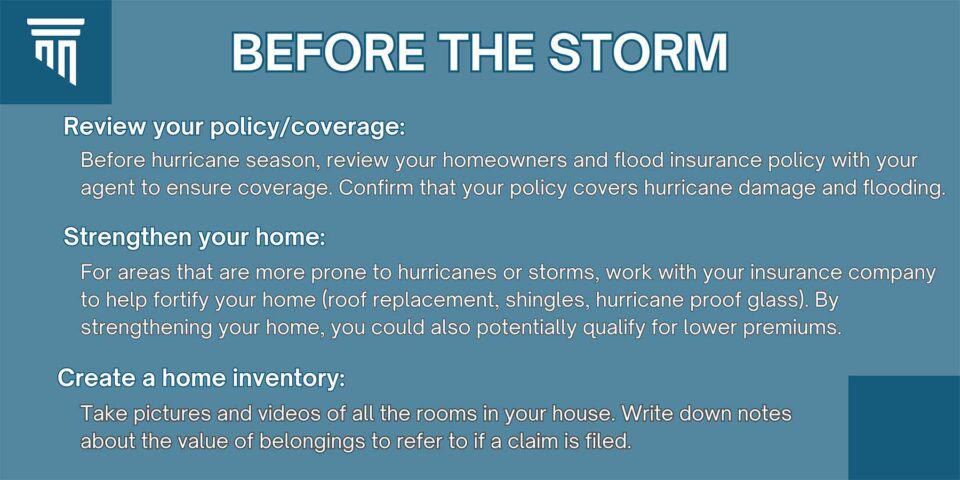
5. Review Your Homeowners’ Insurance Before the Storm
When it comes to hurricane preparedness, having the right homeowners’ insurance is key. Ensure your policy provides the coverage you need to protect your property from hurricane damage. Here’s what to check in your policy:
1. Hurricane Deductible
In Florida, many homeowners’ insurance policies include a hurricane deductible, which is different from your standard deductible. This is a percentage of your home’s insured value (typically 2%–5%) that you’ll need to pay out-of-pocket before your insurance coverage kicks in.
For example, if your home is insured for $250,000, and you have a 2% hurricane deductible, you will need to pay $5,000 before your insurance starts covering the rest of the damages. It’s important to know this percentage and make sure it’s something you can afford in case of a hurricane.
2. Windstorm Insurance Coverage
Windstorm damage is a primary concern for Florida homeowners, as high winds can tear off roofs, break windows, and cause severe structural damage. Most Florida homeowners’ insurance policies cover wind damage, but it’s essential to verify that windstorm coverage is included in your policy. If wind damage is excluded, you may need to purchase a separate windstorm policy.
3. Flood Insurance
As mentioned, standard homeowners policies exclude flood damage. If you have not already done so, price flood coverage now. It comes three ways: a policy through the National Flood Insurance Program (NFIP), a private flood policy, or a flood endorsement that some homeowners carriers add to their own forms.
If you live in a flood-prone area, flood insurance can be a lifesaver. Policies typically cover damage to the structure of your home as well as your personal belongings.
4. Personal Property Coverage
Check that your homeowners’ insurance policy covers your personal belongings. Items like electronics, furniture, and clothing may be damaged during a hurricane. Make an inventory of your possessions, and consider taking photographs for easier claims processing in the event of damage.
5. Additional Living Expenses (ALE)
In case your home becomes uninhabitable after a hurricane, additional living expenses (ALE) coverage can help cover the costs of temporary housing, meals, and other living expenses. Make sure your policy includes ALE coverage, especially in low-lying areas where flooding can make a home uninhabitable.
6. File a Claim After the Hurricane
Once the storm has passed and it’s safe to return home, you’ll want to begin documenting the damage and start the claims process. Make temporary repairs where it is safe to stop further damage, such as tarping the roof or boarding a broken window, and keep every receipt, because policies expect that and consider those costs; hold off on signing a contractor’s contingency or direction-to-pay contract, or anything that hands your claim to someone else, until your carrier has given direction. Be sure to:
-
- Take Photos and Notes: Capture damage to your home, including exterior and interior shots. This documentation will support your claim.
-
- Contact Your Insurance Provider: Report your claim as soon as possible. Insurers across Florida are inundated with claims after major storms, so the earlier you start the process, the better.
Conclusion
Living in Florida means enjoying beautiful weather and coastal living, but it also means being prepared for hurricanes. One of the most important steps in hurricane preparedness is reviewing and understanding your homeowners’ insurance policy. Knowing that your homeowners policy carries windstorm coverage, what your hurricane deductible works out to in dollars, and that you have flood coverage sized for the home can save you thousands in repair costs if a storm hits. Don’t wait until a hurricane is imminent—take the time now to assess your home insurance coverage, and take steps to protect your property and your loved ones.
Taking these steps before a storm hits puts you and your home in a far better position when one arrives.
If you’re reviewing your Florida homeowners’ insurance, contact Cornerstone Insurance today for a comprehensive review of your policy and your options before the next hurricane season.
Hurricane Preparation FAQ
What should I check on my homeowners policy before hurricane season?
Your hurricane deductible percentage and the dollar amount it works out to, whether wind coverage is included or excluded, whether you carry a flood policy, your personal property limit, and your additional living expenses coverage.
How does a Florida hurricane deductible work?
It is a percentage of your dwelling coverage, commonly 2 to 5 percent, that you absorb on a loss from a storm the National Hurricane Center has declared a hurricane, from the first Florida hurricane watch or warning until 72 hours after the last one ends; a named tropical storm runs through your regular deductible. On a $250,000 dwelling limit, a 2 percent deductible is $5,000.
Does homeowners insurance cover flooding from a hurricane?
No. Storm surge and rising rainwater are flood losses, which need a separate NFIP or private flood policy. Helene and Milton in 2024 flooded homes well away from the coast.
How do I document hurricane damage for a claim?
Photograph and note interior and exterior damage as soon as it is safe, keep receipts for emergency repairs, and report the claim to your carrier promptly; on most forms, replacement-cost payments on contents start at depreciated value until you replace the items and document it within the policy’s window, so keep those receipts too, and spoiled food is typically handled only when the outage came from a covered loss at the house rather than a neighborhood outage, since carriers are inundated with claims after a major storm.