
Flood Zone X in Florida: Do You Really Need Flood Insurance?
Zone X means your lender probably will not require flood coverage, and we help you decide how much to carry anyway, since many Florida flood claims come from lower-risk zones. Here is what the zone means and what a policy costs.
In this guide
- What flood zone X actually means (shaded vs. unshaded)
- Is flood insurance required in flood zone X Florida? The lender answer
- Why ‘not required’ is not the same as ‘not needed’ in Florida
- What your homeowners policy will not cover
- How to look up your flood zone (FEMA map service + county tools)
- What flood coverage tends to cost in lower-risk zones: NFIP vs. private
- The 30-day waiting period and hurricane-season timing
- When zone X homeowners should strongly consider coverage
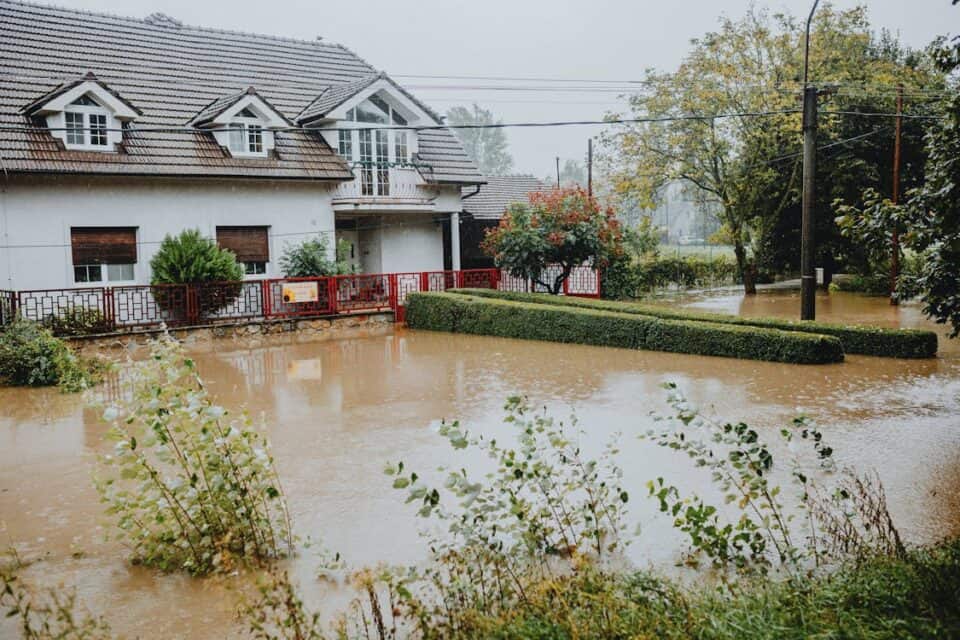
If your house is in flood zone X Florida, the short answer is this: no, your mortgage lender almost certainly will not require flood insurance, but no, you are not automatically safe to skip it. Zone X is a lower-risk designation, not a no-risk one, and FEMA’s own claims data shows a large share of paid flood claims come from outside high-risk zones. Below we explain exactly what zone X means, what your homeowners policy will not do for you, and how to decide whether coverage makes sense for your address.
What flood zone X actually means (shaded vs. unshaded)
Zone X is FEMA’s label for areas of moderate-to-minimal flood hazard that sit outside the Special Flood Hazard Area (SFHA) — the high-risk zones that start with A or V. But “zone X” is not one single thing, and the distinction matters.
- Shaded zone X (formerly Zone B) covers land between the 1%-annual-chance flood (the 100-year floodplain) and the 0.2%-annual-chance flood (the 500-year floodplain). It is a moderate-risk area — real, mapped flood potential, just lower than an A zone.
- Unshaded zone X (formerly Zone C) is minimal hazard, generally above the 0.2%-annual-chance flood level or protected by a levee.
If your flood determination says shaded X or X500, treat it as a meaningful risk signal — you are inside the 500-year floodplain. That precision is exactly what most homeowners miss when they hear “zone X” and assume “no flooding here.”
Is flood insurance required in flood zone X Florida? The lender answer
Federal law only forces flood insurance on federally backed mortgages when a home sits in a high-risk Special Flood Hazard Area. Because zone X is outside the SFHA, lenders typically do not mandate a flood policy. That is the entire basis for the “I’m in X, so I don’t need it” belief — and it confuses a lender requirement with an actual assessment of your risk. Those are two different questions.
Why ‘not required’ is not the same as ‘not needed’ in Florida
Here is the data point worth remembering: FEMA reports that over the 2014–2024 period, roughly 29% of National Flood Insurance Program claims came from properties outside high-risk flood areas, and historically more than 20% of NFIP claims have come from the lower-risk B, C, and X zones. Flood maps are based on river and coastal modeling; they are slower to capture the heavy-rainfall, poor-drainage, and storm-surge events that increasingly drive Florida losses.
Florida felt this directly in 2024, when Hurricanes Helene and Milton pushed record storm surge and inland flooding across the Tampa Bay region — including neighborhoods well outside mapped high-risk zones. A zone X designation describes a long-run statistical probability. It does not promise your street stays dry in a given storm.
What your homeowners policy will not cover
This is the part that catches people after a loss: a standard Florida homeowners policy excludes flood (though some carriers now offer optional flood endorsements). Water that rises from the ground up — surface water, storm surge, overflowing creeks and canals, rainfall that ponds and enters the home — is classified as flood and is not covered, no matter how new or well-built your home is.
Your homeowners policy generally responds to wind and wind-driven rain that enters through a storm-created opening, plus sudden internal water like a burst pipe. The split between wind and water is one of the most misunderstood parts of a Florida storm claim, and it is why two neighbors can have very different outcomes from the same hurricane. We break the wind-versus-flood line down further in our guide to how Florida hurricane deductibles work. Without a separate flood policy, flood damage in zone X comes out of your own pocket.
How to look up your flood zone (FEMA map service + county tools)
Do not rely on memory or what a neighbor told you. Confirm your zone:
- FEMA Flood Map Service Center (msc.fema.gov) — enter your address to pull the official Flood Insurance Rate Map (FIRM) and see whether you are X, shaded X/X500, or an A/V zone.
- Your county’s flood viewer. Many Florida counties run their own mapping tools that are often easier to read than the FEMA portal. Hillsborough County (hcfl.gov), Pinellas, Pasco, and others publish address-level flood-zone lookups. See our county hubs — for example Hillsborough County insurance and Pasco County insurance — for local context on flood risk in your area.
- Ask us to run the determination. When we quote, we pull your zone and replacement-cost picture so you are deciding on facts, not assumptions.
One caution: maps get revised. A property mapped X today can be redrawn into a higher-risk zone after a Letter of Map Revision, which can suddenly trigger a lender requirement. Maps move the other way too: if a revision moves your home out of a high-risk zone and the lender drops its requirement, the premium is unlikely to change much because the zone is not a rating input, and the water has not changed, so talk with us before you let the policy go.
What flood coverage tends to cost in lower-risk zones: NFIP vs. private
Flood insurance in a lower-risk zone is generally far more affordable than coverage in a high-risk A or V zone — that is precisely the case for buying it while you can. You have two markets:
- NFIP (federal). Under FEMA’s Risk Rating 2.0 pricing, your premium is no longer driven mainly by which zone you are in. Instead it reflects your specific property — distance to water, foundation type, first-floor height, replacement cost, and flooding type. NFIP dwelling coverage is capped at $250,000 for the building.
- Private flood market. Private carriers often compete hard for well-built, lower-risk homes and can offer higher dwelling limits, replacement-cost contents, and loss-of-use coverage that NFIP does not include.
We are independent, so we compare both. Rather than quote a premium here — your number depends entirely on your address and structure — let us run NFIP and private side by side. Condo and rental owners have their own nuances; if that is you, see our notes on flood within HO-6 condo insurance in Florida and mobile home insurance in Florida.
The 30-day waiting period and hurricane-season timing
NFIP policies generally carry a 30-day waiting period before coverage takes effect. You cannot watch a storm enter the Gulf and buy a policy that pays for it. There are narrow exceptions — most commonly when flood insurance is required as a condition of a loan closing, or within roughly 13 months of a flood-map change — but for a typical zone X homeowner buying voluntarily, plan on 30 days.
Florida’s hurricane season runs June 1 through November 30, with peak activity in late summer and early fall. The practical takeaway: the time to bind coverage is now, in the quiet part of the calendar — not when a named storm is forecast and carriers stop writing new business. We explain that “binding stops” dynamic in our piece on buying home insurance during a hurricane in Florida.
When zone X homeowners should strongly consider coverage
The amount of flood insurance is the judgment call in zone X, and these facts push the number up:
- You are in shaded X / X500 — you are inside the 500-year floodplain.
- You live near a coast, bay, river, canal, lake, or retention pond, or in a low-lying or poor-drainage area.
- Your neighborhood has flooded before, even from heavy rain rather than a named storm.
- You could not comfortably absorb tens of thousands of dollars in flood repairs out of pocket.
- You want the broader limits and contents coverage the private market can offer.
For most Florida homeowners, a lower-risk flood policy is one of the better dollar-for-dollar protections available — affordable precisely because you are not in a high-risk zone. You can see how flood fits the bigger coverage picture in our Florida homeowners insurance guide.
Talk to a Florida-licensed advisor
If you are in zone X and unsure whether to add flood, let’s settle it with your actual address rather than a guess. Cornerstone Insurance is an independent, Florida-licensed agency that compares 10+ flood options across both the NFIP and the private flood market, so you see real options side by side. Get a quote and we will pull your flood zone and price the NFIP and private routes for your address, so you can decide how much coverage to carry.
Related Florida insurance guides
- Why your Florida home insurance went up, and how to compare for a stronger carrier
- Florida home insurance financial-strength ratings (AM Best, Demotech & Kroll)
- Bundle home, auto & umbrella in Florida with one local advisor
- Your homeowners insurance binder for closing in Florida
- Moving to Florida? How your home & auto insurance changes
Flood Zone X FAQ
My house is in flood zone X in Florida u2014 do I actually need flood insurance, or am I safe to skip it?
Your lender almost certainly will not require it, because zone X sits outside FEMA’s high-risk Special Flood Hazard Area. But you are not automatically safe to skip it. FEMA reports that roughly 29% of NFIP claims from 2014u20132024 came from outside high-risk zones, and your homeowners policy excludes flood entirely. In a lower-risk zone the coverage is usually affordable, so for most Florida homeowners it is worth buying rather than skipping.
What is the difference between shaded and unshaded zone X?
Shaded zone X (formerly Zone B) is moderate risk u2014 land between the 100-year and 500-year floodplains, meaning a 0.2%-annual-chance flood could reach it. Unshaded zone X (formerly Zone C) is minimal hazard, generally above the 500-year flood level. If your determination shows shaded X or X500, treat it as a real risk signal.
Does my Florida homeowners insurance cover any flood damage?
No. A standard homeowners policy excludes flood u2014 surface water, storm surge, and overflow that rises from the ground up are not covered. Homeowners coverage responds to wind, wind-driven rain through a storm-created opening, and sudden internal water like a burst pipe. Flood requires a separate NFIP or private flood policy.
How do I find out my exact flood zone in Florida?
Use the FEMA Flood Map Service Center at msc.fema.gov to pull your official Flood Insurance Rate Map by address, or check your county’s flood viewer (for example hcfl.gov in Hillsborough). You can also ask us to run the flood determination when we quote so you are working from confirmed facts.
Is there a waiting period before flood insurance starts?
Yes u2014 NFIP policies generally have a 30-day waiting period before coverage takes effect, so you cannot buy a policy once a storm is approaching and have it pay for that storm. Limited exceptions exist, such as flood insurance required at a loan closing or within about 13 months of a flood-map change. Buy during the quiet season, not when a storm is forecast.
Is flood insurance cheaper in zone X than in a high-risk zone?
Generally yes. Lower-risk zones typically cost far less than high-risk A or V zones. Under FEMA’s Risk Rating 2.0, your NFIP premium is based on your specific property rather than the zone alone, and the private flood market often competes aggressively for well-built lower-risk homes with higher limits. The only way to know your number is to run NFIP and private quotes for your address.