
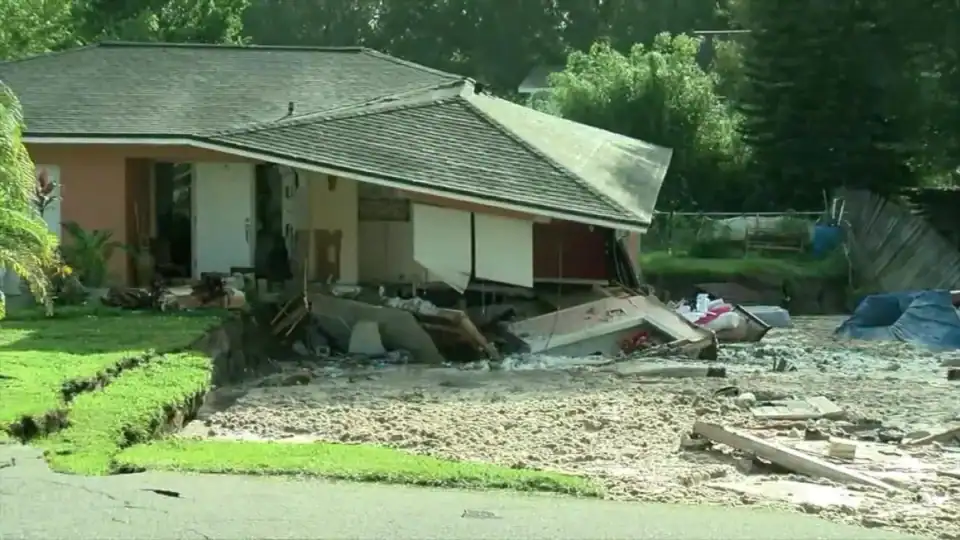
Sinkhole Insurance in Florida: Coverage vs Ground Cover Collapse
The sinkhole coverage you already have with an admitted Florida carrier is catastrophic ground cover collapse, and for most homeowners that is the right place to land. We explain what it includes, what the optional endorsement really involves, and how to know the ground under a home before you buy.
In this guide
- The sinkhole coverage you already have
- What catastrophic ground cover collapse means
- The optional sinkhole loss endorsement: offered by law, approved case by case
- What an approved endorsement looks like: the deductible and the damage test
- What happens after a sinkhole claim
- Know your risk before you buy
- Does sinkhole risk raise your premium?
- Where we come in
The sinkhole coverage you already have
Ask most Florida homeowners about sinkhole insurance and they picture the coverage that is already in their policy. Every admitted homeowners policy written in Florida includes catastrophic ground cover collapse coverage under section 627.706 of the Florida Statutes. You do not pay separately for it, and you cannot remove it. It is written for the severe event, the one where the ground gives way and the house is lost, and for most homeowners across the state that coverage is the sinkhole protection they carry and are comfortable carrying.
There is a second product in the same statute, an optional sinkhole loss endorsement, and it is the source of most of the confusion. It is broader on paper, but it is inspection-gated, often declined, and comes with a deductible and a damage definition that surprise people. This guide covers both honestly so you can decide what fits your home, and it starts where your decision should start, with knowing the ground under the house.
What catastrophic ground cover collapse means
The statute defines catastrophic ground cover collapse as geological activity that produces all four of the following at the same time:
- An abrupt collapse of the ground cover, meaning the ground gives way suddenly rather than settling over months.
- A depression in the ground cover that is clearly visible to the naked eye.
- Structural damage to the covered building, including its foundation.
- An order from the government agency with authority to condemn the structure and require it to be vacated.
Cracking or settling of a foundation on its own does not meet the definition. That is the honest limit of the coverage, and it is also why it stays affordable enough to be in every policy. When the event does happen, it is the kind of loss that ends a home, and that is the loss this coverage is built for. Carriers apply the policy language as written, so read your own policy for the exact wording that applies to you.
The optional sinkhole loss endorsement: offered by law, approved case by case
Florida law requires every carrier to make sinkhole loss coverage available for an additional premium. It pays for structural damage caused by sinkhole activity that falls short of a catastrophic collapse, which is why it sounds like the coverage everyone should want. Offering it and approving it are two different things.
The statute lets a carrier require a property inspection before it issues the endorsement, and the applicant may be asked to share the cost of that inspection whether or not the coverage is approved. Carriers often decline the endorsement based on what the inspection finds, and in the counties where people want it most, many homes cannot get it approved. Surplus lines carriers sit outside the statute entirely, so a home placed in that market may have neither coverage in the same form.
That is the part of the conversation we have most often with buyers moving from other states. The endorsement is not something an agent shops for you the way we compare carriers on a roof or a wind-mitigation report. It is a carrier decision made home by home, and we will tell you straight what is and is not realistic to place for your address.
What an approved endorsement looks like: the deductible and the damage test
When a carrier does approve sinkhole loss coverage, expect a deductible of 10 percent of your dwelling coverage limit. The statute allows 1, 2, 5 or 10 percent, but 10 percent is what carriers, including Citizens, typically write. On a home insured for $400,000, that is $40,000 before the policy pays, and it is calculated on the dwelling limit, not on the size of the claim.
The damage itself has to meet the structural-damage test the Legislature wrote into the statute in 2011. It is a five-part engineering definition that covers foundation movement and structural distress beyond what building codes allow. Cosmetic cracking, sticking doors and hairline drywall cracks do not qualify on their own. Contents and additional living expenses come into play only once structural damage is confirmed. Read those two facts together and the endorsement looks different from the way it is usually sold: it is real protection for a serious foundation loss, with a large deductible and a high bar, not a policy for cracks.
What happens after a sinkhole claim
Florida also wrote the claim process into law. After you report suspected sinkhole damage, the carrier retains a licensed engineer or geologist to test the property, usually with ground-penetrating radar and standard penetration borings; Florida law bars a sinkhole claim, including a supplemental or reopened one, unless the carrier is notified within two years of when you knew or reasonably should have known about the loss, so report suspected damage promptly, and to issue a written report on whether sinkhole activity caused structural damage. If you and the carrier disagree with the findings, either side can request a neutral evaluation by an independent engineer or geologist from a state-maintained list, and the carrier pays for it.
A confirmed claim comes with obligations on both sides. You enter a repair contract within 90 days of the coverage confirmation and complete the stabilization within 12 months, and the carrier pays as the work is performed rather than in a lump sum. Once a sinkhole claim is paid, the carrier files the engineering report, the certification of the repairs and the amount paid with the county clerk. That record sits in the public records on the property permanently. It is not a lien, but every future buyer and underwriter can find it, and Florida sellers must disclose a paid claim and whether the money repaired the home. Denied claims are not recorded. Engineer-certified stabilization can restore a home’s insurability, so a repaired sinkhole home is not off the table, but the paperwork travels with the house.
Know your risk before you buy
Because the endorsement is gated and the built-in coverage is narrow, the most useful sinkhole decision you can make happens before closing, not at renewal. A pre-purchase sinkhole inspection by a licensed engineer or geologist tells you more about a specific lot than any policy option will. Alongside it, these public tools are worth an hour of your time:
- The Florida Geological Survey’s subsidence incident database, which logs reported incidents by county since 1973. Reported incidents are not all verified sinkholes, but they show the pattern.
- The Hernando County Property Appraiser’s searchable database of reported sinkhole-affected properties, and county clerk records anywhere in the state for paid-claim filings.
- The seller’s disclosure and any engineering reports for a home with prior activity or repairs.
The pattern is not subtle. The Florida Office of Insurance Regulation’s 2010 sinkhole data call found that roughly two-thirds of the sinkhole claims reported statewide from 2006 to 2010 came from Hernando, Pasco and Hillsborough counties, which is how the area north and east of Tampa earned the name Sinkhole Alley. Marion, Citrus and other karst counties share the limestone but a much lighter claims history, and much of the state reports far fewer incidents. Our county guides for Pasco, Hernando and Hillsborough carry the local detail. Wherever the home is, the order of operations is the same: know the ground, then talk about coverage.
Does sinkhole risk raise your premium?
Not in the way people expect. Sinkhole coverage is not one of the levers that move a Florida homeowners premium. The age of the home, its construction materials, the dwelling limit, the endorsements you choose such as replacement cost on contents and law and ordinance, your wind-mitigation credits including roof shape, discounts for things like a gated community or a monitored alarm, and the loss history of the area are what carriers price. Because the endorsement is rarely approved, it is mostly absent from the rate conversation. If a quote in a karst county looks high, look at those drivers first.
Where we come in
We insure homes in every county in Florida, including the three that make up Sinkhole Alley, and sinkhole coverage is one of the first questions we hear from buyers in state and out. What we can do is explain plainly what your admitted policy already includes, tell you whether an endorsement request is realistic for a given address and what it would carry if approved, and point you to a pre-purchase inspection when the ground deserves one. Start with our Florida homeowners insurance guide for the full picture, and when you are ready, request a quote and we will go through your sinkhole questions with you directly.
Related Florida insurance guides
- Why your Florida home insurance went up, and how to compare for a stronger carrier
- Florida home insurance financial-strength ratings (AM Best, Demotech & Kroll)
- Bundle home, auto & umbrella in Florida with one local advisor
- Your homeowners insurance binder for closing in Florida
- Moving to Florida? How your home & auto insurance changes
Sinkhole coverage FAQ
Does my Florida homeowners policy already cover sinkholes?
Every admitted Florida homeowners policy includes catastrophic ground cover collapse coverage, the severe event where the ground abruptly collapses, a visible depression forms, the building is structurally damaged and a government agency condemns it. Cracking or settling on its own does not meet that definition. For most homeowners across the state, this is the sinkhole coverage they carry.
What is the optional sinkhole loss endorsement?
Florida law requires carriers to offer sinkhole loss coverage for an additional premium. It addresses structural damage from sinkhole activity short of a catastrophic collapse, but carriers can require a property inspection first, often decline based on the results, and in sinkhole-prone counties many homes cannot get it approved. Surplus lines carriers are outside the requirement.
What deductible comes with sinkhole coverage?
Expect 10 percent of your dwelling coverage limit. The statute allows 1, 2, 5 or 10 percent, but 10 percent is what carriers typically write, including Citizens. On a $400,000 dwelling limit that is $40,000, calculated on the limit rather than on the claim.
Would sinkhole coverage pay for cracks in my walls?
Cosmetic cracking does not meet the structural-damage definition Florida wrote into the statute in 2011, which is a five-part engineering test for foundation movement and structural distress. Contents and additional living expenses apply only once structural damage is confirmed, and each carrier applies its own policy language.
What happens if a sinkhole claim is paid?
You contract for repairs within 90 days of coverage confirmation and finish within 12 months, and the carrier pays as the work is done. The engineering report and the amount paid are then filed with the county clerk and become part of the public records on the property, which sellers must disclose. Denied claims are not recorded, and engineer-certified stabilization can restore insurability.
Should I get a sinkhole inspection before buying a home?
In a karst county, yes. A pre-purchase inspection by a licensed engineer or geologist tells you more about the lot than any endorsement can, and the Florida Geological Survey’s incident database and county records add the history. Hernando, Pasco and Hillsborough produced roughly two-thirds of reported sinkhole claims from 2006 to 2010, so the question matters most there.
Does sinkhole risk make my premium higher?
Sinkhole coverage is not a main driver of a Florida homeowners premium. Age of the home, construction materials, the dwelling limit, endorsements like replacement cost on contents and law and ordinance, wind-mitigation credits and area loss history are what move the rate.